

The Dubai Majlis: Where Heritage and Modern Design Come Together
Across Dubai households, the majlis is much more than a mere sitting room; it stands as the beating heart of hospitality, a space in which guests are received, business is conducted, and the family gathers over dates and freshly brewed coffee Rooted deeply in Emirati and wider Gulf tradition, the majlis brings generations of hospitality and etiquette into the contemporary villa and the tower apartment alike Homeowners across Dubai more and more want to celebrate that tradition without sacrificing the sleek lines and quiet luxury of modern design The standout interiors of 2026 land precisely at that meeting point, matching carved timber screens with statement sofas and warm desert hues with discreet smart lighting Regardless of whether your home overlooks the water in Dubai Marina or lies among the Arabian Ranches villas, a well-planned majlis can become its most memorable room As you read on, you’ll find realistic 2026 market cost ranges to help transform inspiration into a workable plan
The Soul of the Majlis: And Why It Endures
Before you pick a single fabric, it is worth grasping what the majlis genuinely stands for in Emirati culture Conventionally it serves as a semi-formal reception space, often sited near the entrance homeinteriordesign.ae/services/majlis-design so that guests can be received without walking through the private areas of the home Seats line around the room’s edges, which sparks conversation and allowing all to sit face to face as equals In many Dubai households a distinct men’s and women’s majlis is still preferred, especially in bigger villas across Jumeirah and Al Barsha The space also reflects a family’s style and generosity, so it usually gets the most opulent materials and the boldest design gestures Once you keep this purpose in mind, every later decision, from layout to lighting, becomes far easier
First Idea: Low Seating That Invites Guests to Stay
Low, floor-level seating piled with plush cushions defines the classic majlis, and it is still a wonderful place to begin For a modern take, many Dubai designers lift the seat height slightly and exchange thin floor mattresses for structured, deep-cushioned banquettes upholstered in performance fabrics Unbroken perimeter seating keeps the traditional face-to-face arrangement while looking tailored rather than casual Bolsters, lumbar cushions, and a few richly embroidered pillows, layered together, add comfort and a genuine sense of welcome Thanks to neutral upholstery, you can update the entire look each season by simply changing the cushion covers A low central table or a group of brass-topped side tables puts coffee and dates within easy reach of every seat Ultimately, the aim is seating so comfortable that guests are content to stay well after the coffee is served
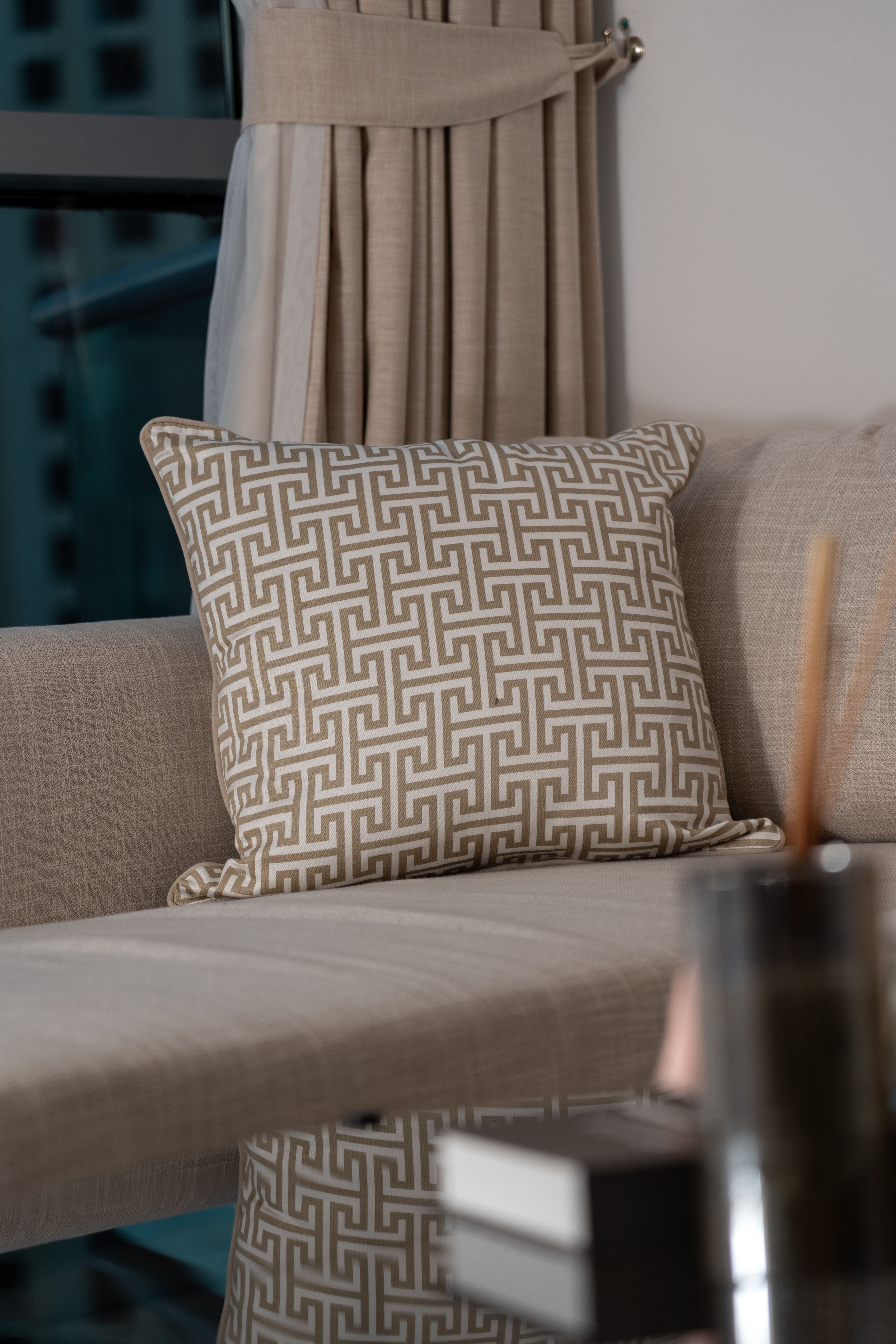
- Select stain-proof performance fabrics that are made for frequent entertaining
- Allow a walkway of at least 70 to 90 centimetres behind the seating
- Set firm base cushions against softer scatter pillows to deliver support and comfort
- Bring in floor cushions so additional guests can always be accommodated with ease
Idea Two: A Palette Rooted in Desert and Light
Colour is where heritage and modernity come together most naturally in a Dubai majlis A base of warm sand, ivory, and soft taupe mirrors the surrounding desert and keeps the room feeling calm and expansive Over that base, designers introduce richer accents such as burnt terracotta, olive, deep teal, or the classic pairing of maroon and gold Metallic finishes play a key supporting part, with brushed brass and aged gold adding the glow long associated with Gulf interiors Because 2026 leans firmly toward quiet luxury, metallics are used sparingly rather than covering every surface Treat natural light as a design material in its own right, and let sheer layered curtains soften Dubai’s intense midday sun Ultimately, the palette should read as grounded in the land yet clearly refined
Third Idea: Mashrabiya, Arches, and Contemporary Screens
Few features evoke heritage quite like the mashrabiya, the elaborately carved timber screen that has cooled and shaded Gulf homes for centuries In today’s majlis it can be recast as a laser-cut metal or timber partition, a statement feature wall, or a sliding panel that filters light between rooms Soft arches, whether framing a doorway or repeated as wall niches, add a soft architectural rhythm that reads as both classical and current Enlarged and stripped back, Islamic geometric motifs read as contemporary art rather than pastiche These elements also address practical problems, offering privacy and shade without obstructing airflow or valuable daylight With a light touch, such details give the room instant cultural depth
Idea Four: Ceilings and Lighting as a Statement
In plenty of Dubai majlis schemes, the ceiling is handled as a fifth wall and a true focal point Recessed coves, layered gypsum details, and understated timber beams create visual interest overhead without filling the floor space A big central chandelier remains a beloved statement, though 2026 tastes favour sculptural, cleaner-lined fixtures over heavily crystalled designs Alongside that centrepiece, a layered mix of warm recessed downlights, wall washers, and hidden LED strips flatters both the space and its guests With dimmable, smart-controlled circuits, the same room shifts from a bright afternoon gathering to an intimate evening majlis More often than not, it is lighting that turns a merely pretty majlis into a truly atmospheric one
Idea Five: Custom Joinery Meets Heritage Detail
Made-to-measure joinery is where a majlis becomes genuinely one of a kind Fine carpentry drives built-in perimeter seating, hidden storage and niches for heirlooms or an oud burner Thanks to Dubai’s strong network of joinery workshops, bespoke cabinetry, panelling, and screens are very achievable even on mid-range projects Natural materials carry the heritage theme, so expect walnut, oak, rattan detailing, and hand-woven rugs layered over polished stone or porcelain floors Small handcrafted touches, such as a mother-of-pearl inlay tray or a handmade brass incense burner, link the space to regional craft Pairing these tactile, warm materials with a few sleek contemporary pieces keeps the space from ever feeling like a museum The magic really lies in the balance between the artisanal and the polished
Traditional and Modern, Side by Side
It can help to see how classic and contemporary majlis choices compare side by side Below, the table pairs common traditional elements with their modern Dubai interpretations, along with the mood each tends to create Use it as a menu rather than a rulebook, mixing rows freely to match your home and budget Many of the most successful 2026 interiors pull from both columns within a single room A largely modern shell, for example, can be beautifully warmed by one or two strongly traditional features In reverse, a classically styled majlis feels fresh with restrained modern lighting and simplified pattern
| Feature | Traditional Approach | Modern Dubai Take |
|---|---|---|
| Seats | Perimeter floor cushions | Low, structured banquettes in neutral performance fabric |
| Palette and materials | Maroon, gold, heavy ornament | A sand and ivory base with sparing metallic accents |
| Pattern and partitions | Carved timber mashrabiya | Laser-cut screens and simplified geometric motifs |
| Lighting | An ornate crystal chandelier | Sculptural fixture plus layered, dimmable LED |
| Floors | Stacked traditional carpets | Large-format stone or porcelain with a statement rug |
Budgeting and Planning Your Majlis in 2026
More often than not, a dedicated majlis refresh is more attainable than homeowners expect As a 2026 market estimate, mid-range residential interiors in Dubai sit at about AED 200 to 400 per square foot, while high-end and luxury villa work can reach AED 600 to 1,200 or more A single majlis of around 250 to 400 square feet therefore sits comfortably within many renovation budgets, particularly if you preserve the existing shell Custom joinery, imported stone, and statement lighting are the elements most likely to drive costs up Design fees alone typically fall around AED 175 to 550 per square foot, or about 10 to 20% of the total budget Keep in mind that these figures are wide market ranges rather than firm quotes, so check the specifics for your own home
A Realistic Timeline, From Idea to Welcome
Timing depends on how much you change, but a clear sequence helps set expectations Limited to furniture, textiles and lighting, a cosmetic majlis update can often be completed within a few weeks A fuller renovation involving joinery, ceilings, and finishes generally follows the broader residential pattern of roughly six to ten weeks on site Expect two to four weeks for concept design, and detailed design plus material selection add several more weeks before work starts Should your building require approvals, leave extra time for a fit-out permit and any required no-objection certificate Adding a snagging buffer ensures the finished majlis is ready to welcome guests without any last-minute stress Set the sequence out early, and the whole project runs with far less friction